Makua (Parenting) Tip
Week of February 21, 2016
`Ōlelo No`eau: (Mary Kawena Pukui): `A`ohe pau ka `ike I ka hālau ho`okahi.
(All wisdom is not taught in one school.)
Believe it or not, preparing a child for school starts the day you bring that infant home from the hospital. A secure bond between you and your infant/toddler, provides an optimal foundation for life: eagerness to learn, healthy self-awareness, trust and consideration for others. It provides a secure base from which your child is able to explore the outside world, trusting that you as a parent will be there to support her. Keiki learn best through their everyday experiences with the people they love and trust, and when the learning is fun. By enjoying a variety of experience with your child (mealtimes, bath time, quiet time, walks, trips to the store) you are teaching your child how to learn.
Week of February 14, 2016
`Ōlelo No`eau: (Mary Kawena Pukui): Li`ili`i ka `ōhiki, loloa ka lua.
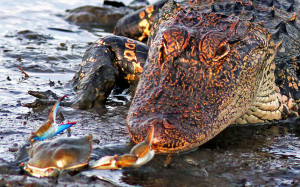
(Small is the crab, large is its hold. Size does not limit accomplishments)
Your infant/toddler is working very hard to become the adult he/she will one-day be. Celebrate his/her accomplishments. These accomplishments are also known as milestones. Learning to roll, to crawl, to walk, to run and jump, to speak, to listen, to stack blocks, to hold a crayon, these are all great and marvelous accomplishments. Encourage your child with your voice, with your words, with your touch. And remember, we all learn by our mistakes. Mistakes are a child’s friend. When your child dumps the cereal on the floor, he/she is learning about gravity!
Week of February 8, 2016
`Ōlelo No`eau: (Mary Kawena Pukui): Ua lehulehu a manomano ka ‘ikena a ka Hawai‘i.
(Great and numerous is the knowledge of the Hawaiians.)
Western science is turning to indigenous knowledge to combat global environmental problems such as extreme climate change. Your young child may grow to be the adult who contributes the answers to some very serious issues affecting the world. Don’t forget, you are your child’s first and best teacher. You can’t just rely on school. From birth you should talk to your child constantly. Share experiences with him/her, even if your baby doesn’t understand your words. Infants love the sound of your voice, and they are beginning to absorb language. Encourage exploration. Seek the wisdom of na kupuna. And tell you child stories of his personal history, and the history of his ancestors.
Week of January 30, 2016
`Ōlelo No`eau: (Mary Kawena Pukui): E kāpae a`e i kou mana`o huhū. (Put away your angry thoughts.)
Our lives are stressful, and sometimes it is difficult to leave the frustrations and hurt feelings behind us when dealing with our keiki. However, very young children are “emotional barometers.” They pick up on our emotions and may even reflect them back to us. It is worth taking the time to “put away your angry thoughts” before engaging with your child.
Week of January 24, 2016
`Ōlelo No`eau: (Mary Kawena Pukui): Momoe aku I mua. (Move ahead with determination.)
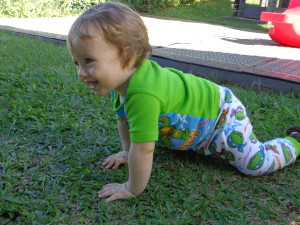
Crawling is an important milestone for a baby. The following are suggestions provided by Zero-Three to help your baby move ahead with determination.
- Give your baby plenty of tummy time, starting from birth. … (but always BACK to SLEEP)
- Encourage your baby to reach for and move toward the toys and objects she/he is interested in.
- Make sure your baby has space to explore that is safe and supervised.
- Place the palms of your hands behind your child’s feet when he is on all fours.
Baby learning to walk?? Skip the shoes! When baby is first learning to walk, bare feet are best: They allow him/her to gain balance and grip the ground. If your child is already walking, help him/her with gross motor activities such a jumping, and kicking
Week of January 17, 2016
`Ōlelo No`eau: (Mary Kawena Pukui): `O ka ikaika o ka mana`o me ke kino. (Be strong in mind and body.)
We know that regular exercise results in a strong body. This is why our babies need “tummy time.” Tummy time helps them to exercise. Our toddlers get exercise as they run and explore. But we need to also help our infants and toddlers exercise their minds. One way to do this is to engage in “parallel pointing.” As soon as your baby starts to point at objects, point with him/her and say the name of the object. This will help develop vocabulary and expand the mind.
Week of January 10, 2016
`Ōlelo No`eau: (Mary Kawena Pukui): `O ka hā`ule nehe a na lau la`au, he hāwanawanaia I ka po`e ola. (The silent falling of the leaves of the trees is a whisper to the living.)
From the time they wake up in the morning, until they go to bed at night, children’s environments are awash in noise: dishwasher, garbage disposals, coffee grinders, blenders, music, computers and cell phones. Going outdoors, we can add lawn mowers, leaf blowers, barking dogs, as well as car alarms and noise from traffic. Find a quiet time for yourself and your child. Enjoy the peace and solitude, the silence. It is rare, but can be found with just a little effort.
Week of January 3, 2016
`Ōlelo No`eau: (Mary Kawena Pukui): Ha`aheo I ka miki`oi o ke kai o Lehua. (Ha`aheo dances because of the clear calm waters of Lehua, meaning that one can do things well when calm.)
Raising a child to someday be a responsible, happy, adult is one of life’s most important jobs. It is one at which we all want to excel. But, in the hustle and bustle of our busy lives, balancing work, family chores, bill paying, and child rearing, life can be hectic. Take a few moments for yourself each day. Take a walk, read, sing, soak in the tub, or just sit quietly. You are worth it, and it will help you to remain calm when dealing with your child.